Existing Equipment Condition
Review the machine, controller, cabin, doors, guide system, suspension components, fixtures and available service history.

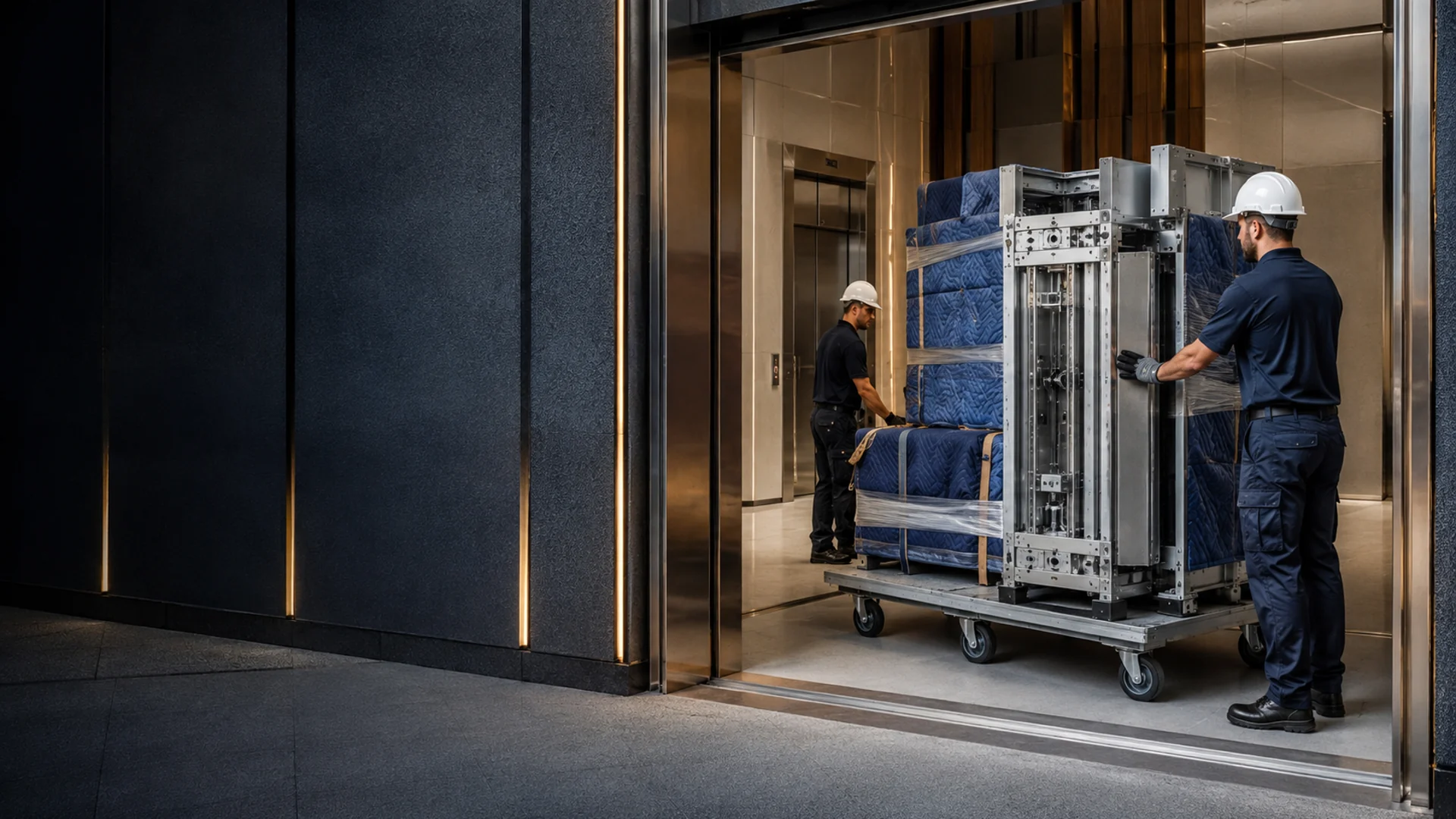
Technical assessment, controlled dismantling, protected transport, reinstallation and commissioning for suitable elevator systems.
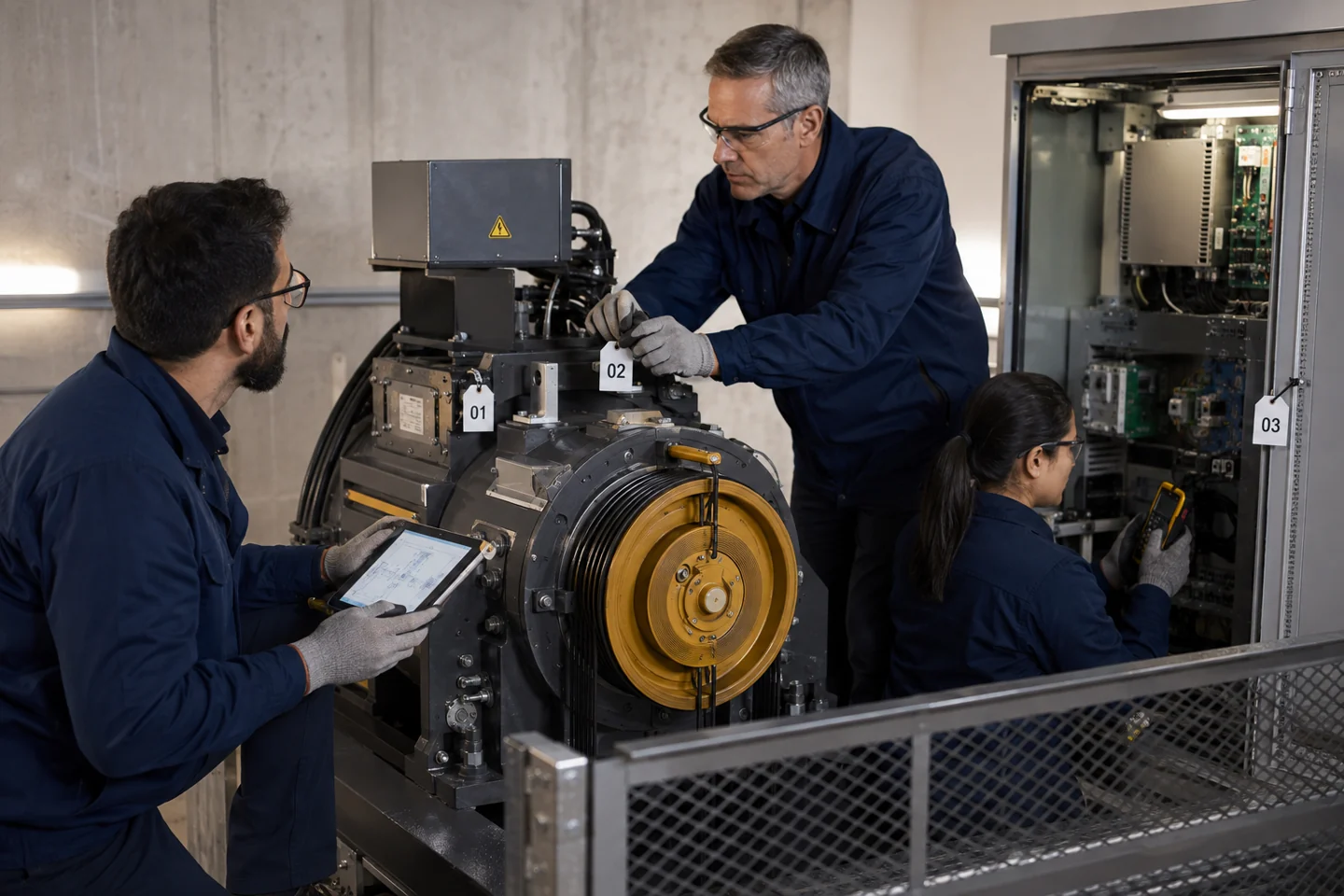
Elevator relocation is more complex than moving individual components. The existing system, destination building and required performance must be considered together before reuse can be recommended.
Review the machine, controller, cabin, doors, guide system, suspension components, fixtures and available service history.
Compare the destination shaft, pit, overhead, travel, landings, door arrangement, power and structural interfaces.
Consider removal, transport, refurbishment, replacement items, reinstallation, programme, future support and expected service life.
The review may support full relocation, partial reuse with upgrades, or replacement with a more suitable FUJI-HITECH solution.
Key equipment is serviceable, traceable and compatible with the new building, subject to the agreed relocation and approval scope.
Suitable equipment is retained while worn, obsolete or incompatible items are refurbished, modified or replaced.
A new system may be more appropriate where compatibility, condition, supportability, safety, performance or long-term value is not acceptable.
Important: FUJI-HITECH does not recommend relocation until the equipment and destination have been assessed. Reuse is subject to technical suitability, agreed documentation and applicable project requirements.
The final scope is tailored to the elevator, both locations and the agreed condition of reusable equipment.
Record configuration, access, equipment identity, condition, interfaces and constraints affecting safe dismantling.
Identify components proposed for reuse, refurbishment, replacement or disposal and establish a traceable relocation schedule.
Verify shaft, pit, overhead, landings, structure, machine-space strategy, access, power and service interfaces.
Define necessary adaptations to supports, entrances, controls, wiring, fixtures and building interfaces at the new location.
Plan isolation, identification, controlled dismantling, packaging, storage and movement of approved reusable components.
Reassemble, integrate, adjust and commission the relocated system under the approved project and agreed testing scope.
A controlled sequence protects equipment identity, condition, quality and project coordination.
Review the reason for relocation, both sites, programme, expected performance and available records.
Identify the system, evaluate visible condition and determine what requires further verification.
Compare equipment requirements with the destination shaft, structure, services and access.
Confirm reusable items, replacement recommendations, responsibilities, assumptions and exclusions.
Control dismantling and label approved components to maintain traceability through the move.
Package, handle, store and transport the equipment using the agreed movement and protection plan.
Install compatible equipment and integrate approved new or refurbished components at the destination.
Adjust the system, complete agreed checks and transition the relocated elevator into service.
Identification and protection help reduce loss, mix-ups, finish damage and reinstallation uncertainty when components move between sites.
Component Register Record major equipment and its proposed reuse, refurbishment or replacement status.
Identification Label dismantled components to preserve their relationship with the original system and landing locations.
Condition Records Note visible condition and agreed exceptions before packing and transport.
Protection & Storage Protect sensitive mechanical, electrical and finished components from moisture, impact and contamination.
Controlled Release Confirm destination readiness before reusable equipment is delivered for reinstallation.
Relocation feasibility depends on the complete equipment-building interface, not only whether the cabin fits inside the shaft.
Required travel, number of stops, floor levels and landing arrangement.
Available width, depth, wall construction, openings and installation tolerances.
Clearances and construction conditions required by the proposed configuration.
MRL or MMR arrangement, equipment space, access and support provisions.
Door type, clear opening, entrance dimensions, landing interfaces and finishes.
Rated load, speed, intended use and operational suitability for the new building.
Electrical supply, control architecture, communication and building interfaces.
Delivery, installation, inspection and long-term maintenance access.
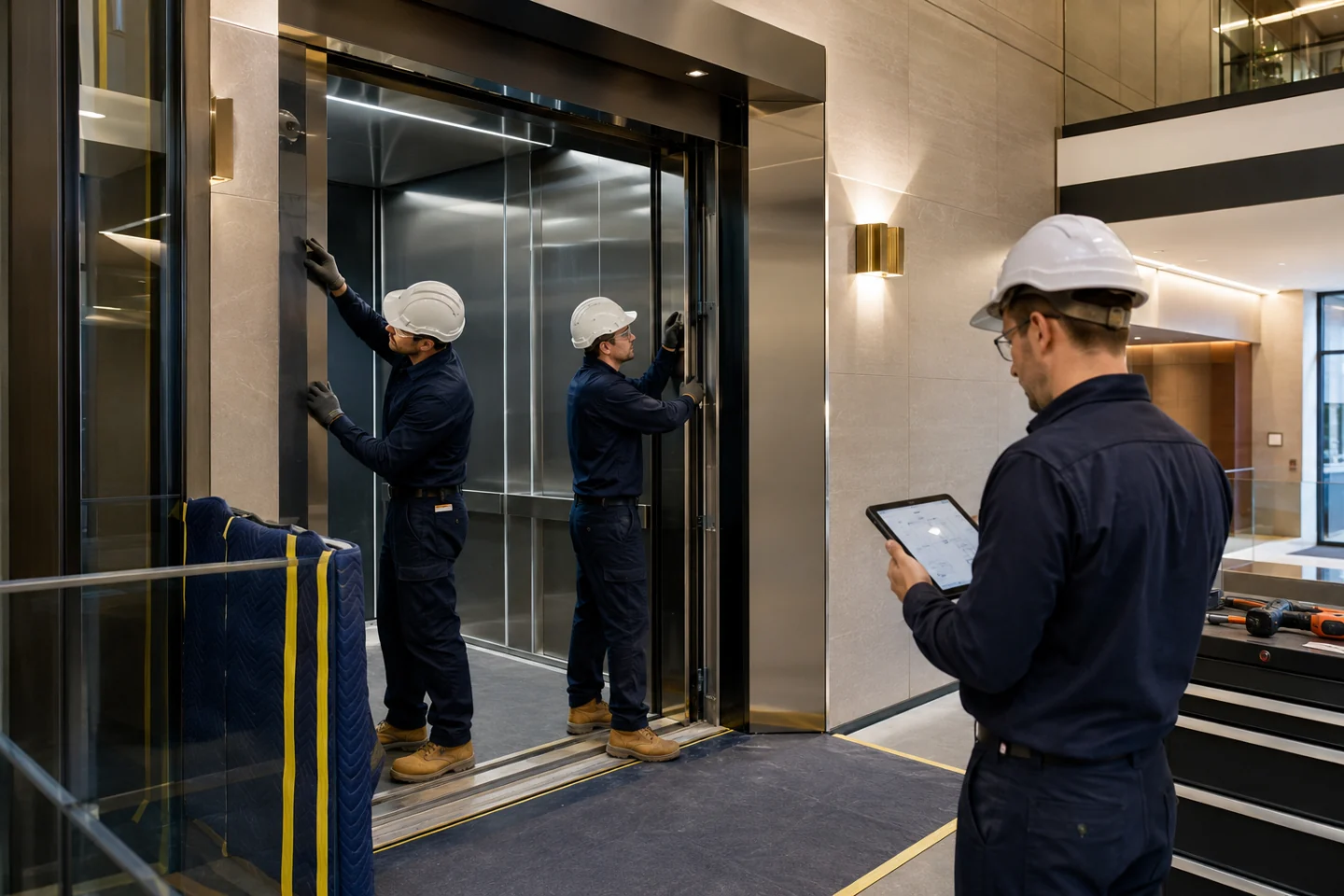
The relocated system is treated as a complete installation at its new location.
Reusable, refurbished and new components must work together at the destination. The system is reassembled, adjusted and checked against the approved relocation scope before operational handover.
Guide systems, car, counterweight, drive and suspension interfaces.
Landing entrances, car doors, operator and applicable interlocks.
Controller, travelling cable, fixtures, signals and destination interfaces.
Movement, stopping, floor alignment and ride adjustment.
Agreed protection and emergency functions for the relocated system.
Relevant checks, outstanding items and agreed handover information.
The decision should balance immediate project needs with safety, compatibility, serviceability and long-term value.
Responsibilities and interfaces must be defined at both the removal site and destination before relocation begins.
Key questions about feasibility, reuse and the destination project.
No. Suitability depends on equipment condition, age, configuration, documentation, component support, destination dimensions, required performance and applicable project requirements. An assessment is needed before relocation can be recommended.
Not necessarily. Some items may be reusable, while others may need refurbishment, modification or replacement because of wear, compatibility, safety, supportability or new-site requirements.
No. The full cost includes assessment, dismantling, transport, storage, adaptation, replacement items, reinstallation, testing and future maintenance. A new system may offer better value in some projects.
Send the existing elevator details, service records, available drawings, photographs, both project addresses, destination plans, required travel and landings, intended use and programme.
Potentially. Controls, fixtures, doors, finishes or other components may be considered for upgrade where technically suitable and included in the agreed relocation scope.
The project scope can include adjustment, functional testing, commissioning and agreed handover information. Exact inspections and approval requirements are confirmed for the project.
Send us the existing equipment information and destination drawings for an initial FUJI-HITECH project review.